



We spend our careers helping brands grow – refining strategy, maintaining relevancy and sharpening their competitive position in crowded markets. Turning that same discipline inward is a different kind of challenge.
For us, the decision to rebrand wasn’t about reinvention. It was about evolution. With new leadership at the helm and expanded capabilities, our next chapter deserved to reflect the maturity and momentum shaping our agency’s future.
Leading our own rebrand was more than an opportunity for fun creative exploration. It forced us to sit with the same pressure and tough decisions our clients face, giving us a fresh perspective on the realities of rebranding.
Here are four lessons we learned that can serve as a blueprint for other organizations considering their own brand refresh.
1. Don’t Let Perfection Stall Progress
One of the biggest challenges was finding the right balance between moving forward and overthinking decisions. Branding choices are highly visible and have long-term impact, which makes it easy to get stuck weighing every option when you’re so invested in getting it right.
Our solution was applying structure to the process – setting deadlines and pushing ourselves when early ideas or explorations were still taking shape. That discipline helped ensure the work was rooted in intentional strategy, not impulse, and progressed with intention.
2. Research Brings the Competitive Landscape into Focus
Research played an important role in helping our agency better define our niche and communicate our point of differentiation more clearly. We conducted an audit of direct peers and best-in-class agencies, interviewed team members and surveyed clients to understand which aspects of the agency are most valued and true to our brand. We also mapped a customer journey to better understand what brand marketers want and need from their agency partners.
Something that caught our eye was how many agencies focus their branding inward, emphasizing awards and accolades. While that recognition can benefit clients, the emphasis can sometimes feel self-serving. That contrast helped us clarify who we are – and who we’ve always been: an agency driven not by the spotlight, but by what works best for our clients and by the care we show each other.
3. Define Guardrails to Balance Brand Legacy and Creative Exploration
Creative development forced us to answer a question every brand eventually faces: how far can you push change without leaving your legacy behind? Our team had thoughtful discussions about whether to change our name and how dramatically to shift our visual identity. We wanted to signal a meaningful transformation to the market without losing the identity, reputation, and equity we had built over four decades. Reaching alignment on that balance was one of the hardest parts of the process.
When making these challenging decisions, establishing clear guardrails rooted in research was what made the difference. Once we agreed on what needed to stay and what could evolve, the creative exploration became far more focused and productive. For example, our audit confirmed our purple brand color was an ownable space, and it carries history for us. Evolving its shade allowed us to honor our legacy while expressing our identity in a more modern way.
4. Feedback Builds Empathy and Better Collaboration
Multiple rounds of review reminded us that feedback is rarely simple. It’s layered, emotional and often harder to articulate than it seems. Navigating those conversations internally – balancing different perspectives and high standards – made the work stronger and the collaboration more thoughtful.
Going through that process ourselves built a deeper empathy for our clients. We were reminded how difficult it can be to give meaningful input when the stakes feel high. Rebranding is vulnerable work. Today, we carry that awareness into every engagement, asking better questions and creating more intentional space for honest, productive dialogue.
Ultimately, the success of our rebrand will be reflected in whether clients and the industry recognize the value of working with an agency that thrives on doing what’s right in an industry that thrives on doing what’s trendy. For us, that’s always been about relationships, thoughtful strategy and the quality of the work itself.
For organizations considering their own rebrand, our advice is to invest in strong strategy and resist the urge to rush the process. It’s tempting to toss out taglines and logos to see what sticks, but lasting differentiation comes from an intentionally built identity and a clear sense of purpose. A meaningful identity not only catches attention, it also gives your team something real to rally behind.
Marcie Garcia is the director of brand strategy at Meyocks, where she leads the agency's brand strategy function and oversees a team focused on driving insightful strategies for clients and growing new business. Informed by a psychology background and global experience across a broad range of industries, she brings a deep understanding of consumer behavior and how communications can solve meaningful problems for both businesses and the people they serve.

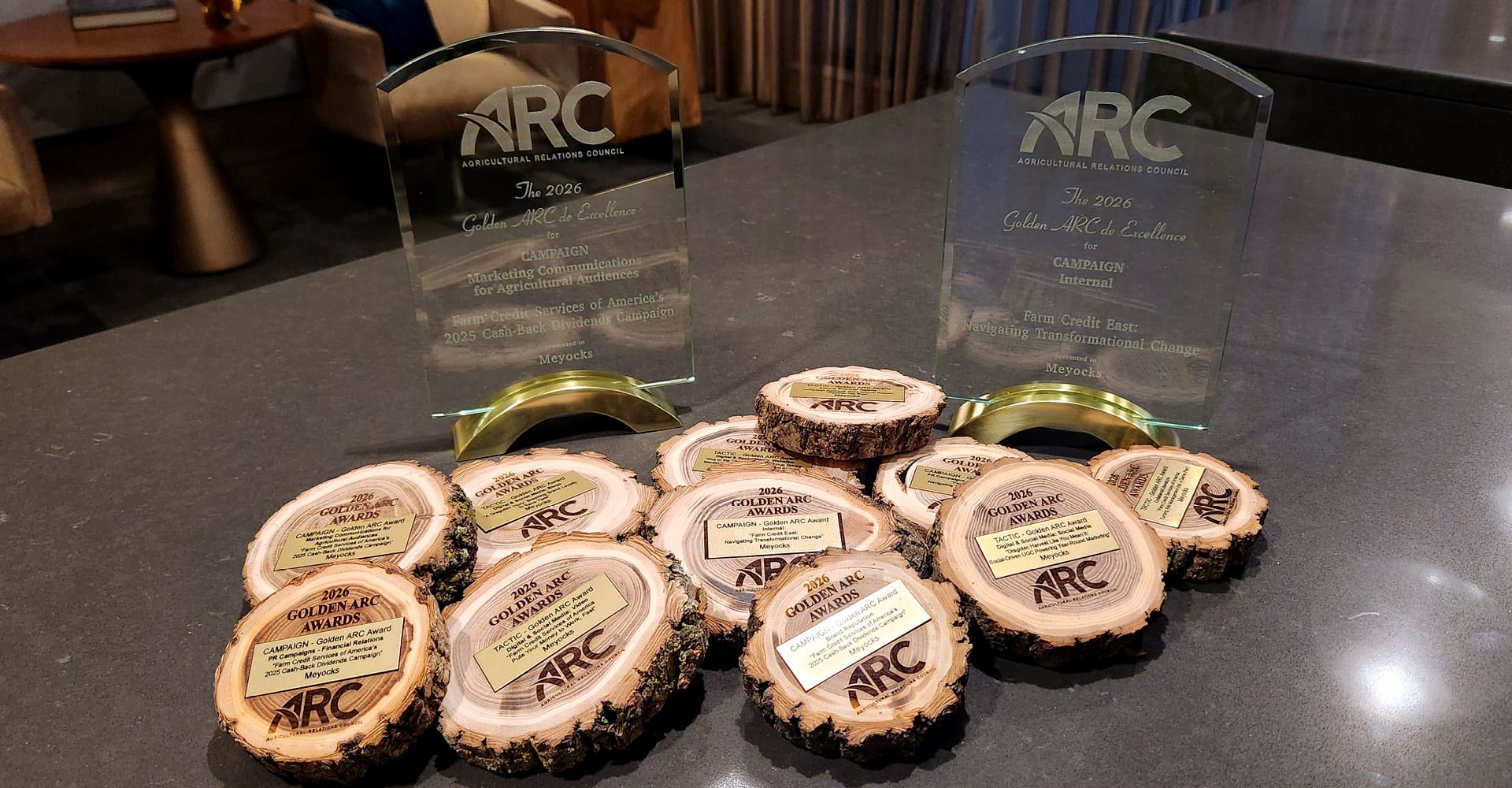
Meyocks Takes Home 11 ARC Awards for Outstanding Work in Ag Communications

Rise of the Intentional Internet: What it Means for Marketers in 2026